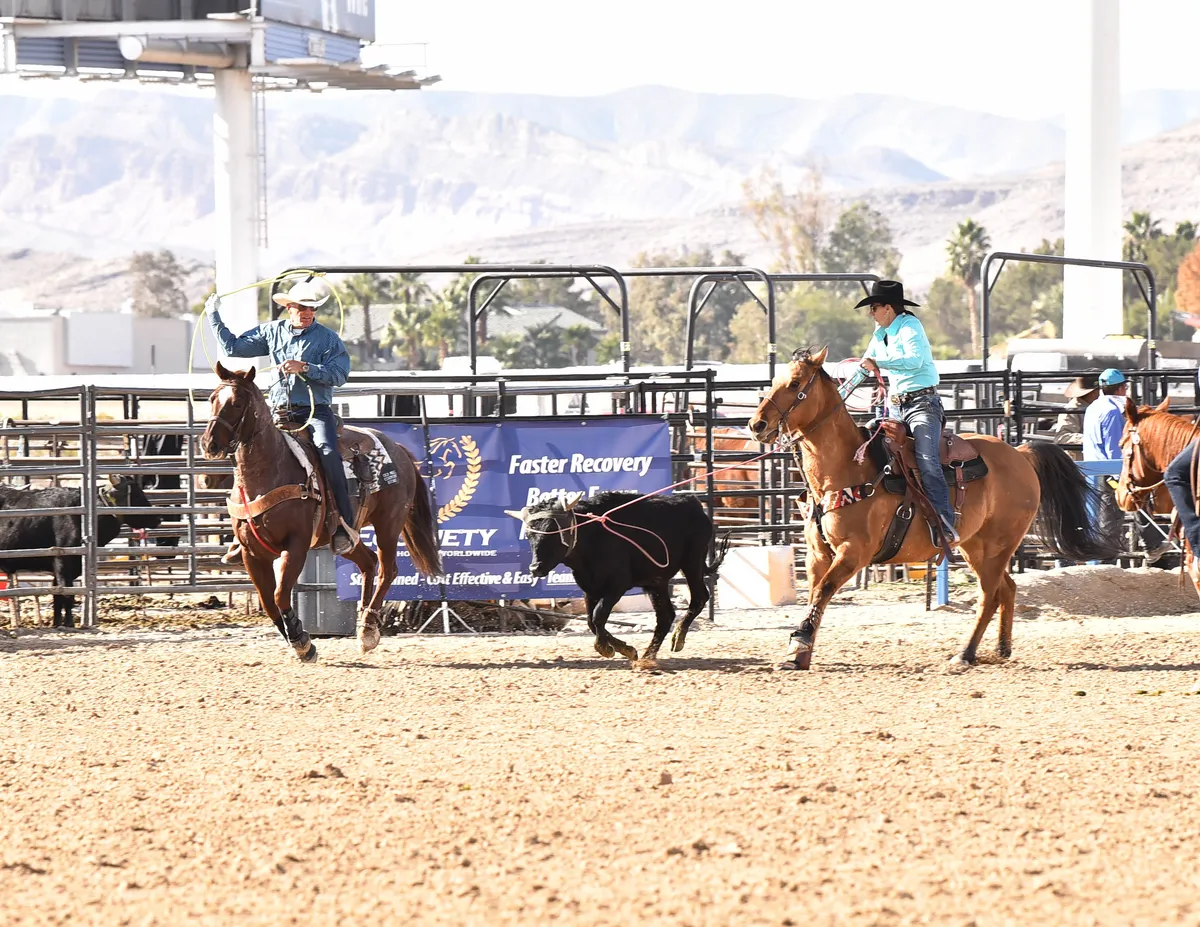
How to Recover From Mistakes in Sports: Be Curious, Not Critical
The drive home was always the worst part.
I'd made my run, loaded the horse, and pulled out of the parking lot. Somewhere around the first stoplight, the trial would begin. Exhibit A: the mistake. Exhibit B: every other mistake I'd ever made in an arena. The verdict usually came down somewhere on the highway: What is wrong with me?
I did this for years, and the strange part is that I thought it was productive. I figured being hard on myself was how you got better.
It wasn't. It was how I stayed exactly the same.
WHY "WHAT IS WRONG WITH ME?" NEVER HELPS
Here's the problem with that question. It sounds like a question, but it's really a verdict dressed up in a question mark. There's no useful answer to it except "everything," and "everything" isn't something we can work on.
Worse, every replay is another rehearsal. When we run the mistake on a loop, we're practicing it. Do that enough times and one bad run turns into "I always do this," and "I always do this" is how a mental block in sports gets built. I've watched it happen in my own head and in the competitors I coach.
If you're searching for how to recover from mistakes in sports, here's the shift that finally worked for me: stop judging the run and start investigating it.
BE CURIOUS, NOT JUDGMENTAL
You may know the line from Ted Lasso. He shares it at the start of his darts scene: be curious, not judgmental. His point is that the people who judged him never got curious enough to ask him a single question. (Ted credits the line to Walt Whitman, but there's no evidence Whitman ever said it. Poor Walt.)
I love how simple it is. A judgment closes the door on learning. A question opens it.
So after a performance, once I've had time to settle, I ask three questions:
1. What happened? Just the facts, like a reporter. No story about what it says about me as a person.
2. What's one thing I want to try next time? One thing, not twelve.
3. What went well? I save this for last on purpose. Our brains are wired to skip right past it, and I want to end on the positive.
This is also how a next play mentality actually works. We're not ignoring the mistake. We're learning what we can from it so we can finally let it go.
WHY YOU HAVE TO WRITE IT DOWN
Here's the catch. Questions in our heads disappear by dinner, or the critic grabs the microphone before we get to question two.
That's why I put these questions on paper, and why I built the Mental Game 101 Performance Journal. A few things I'm picky about:
Write it the same day, or the next morning at the latest. It's fresh, and the story hasn't had time to get dramatic.
Think like a scientist. Record what you did, how you felt going in, what your energy was like, and which mental strategies you used. Write down the conditions too, like footing, weather, and equipment. Some of what we blame ourselves for turns out to be the arena.
Be positive and specific. Instead of "I screwed up" or "I missed," write "keep my eyes on the target" or "follow through." It's the same information, but it gives your brain something to do instead of something to dread.
END WITH WHAT WENT WELL
If I could only keep one section of the journal, it would be this one. Pick your best run, play, or shot of the day, and relive it. How did it look? How did it feel? That one memory tends to unlock every small win from the day, the technical ones and the mental ones: I stayed with my routine. I re-focused fast. I executed under pressure.
When we write those down, we're more likely to repeat them. Then we turn what we've learned into power statements, in first person and present tense, as if they're already true: I keep my elbow up. I am great at rallying back.
Over time, you build two things. One is a record of what actually works for you. The other is a "what went well" list you can read before your next big event. Doing a little bit every day adds up to a lot.
TRY THIS AFTER YOUR NEXT RUN
You don't need the journal to start. After your next performance, wait until you've settled down, not at the trailer door and not at the first stoplight. Then ask:
- What happened?
- What's one thing I want to try next time?
- What went well?
If the inner critic shows up first, that's okay. Thank it for sharing and ask a better question.
WANT MORE HELP?
If you'd like to put this on paper, you can find the Mental Game 101 Performance Journal at mentalgame101.com/performancejournal. And if you'd like a daily dose of mindset input, join me on the Cowgirl Up podcast at mentalgame101.com/podcast, Monday through Friday.
If you keep hitting the same mental wall and aren't sure why, that's exactly what I help with as a mental performance coach. You can book a free discovery call here: https://thehub-api.mastermind.com/widget/booking/4lv6jvtWDaKLScRzga20 and we'll talk about what's going on.
About the author: Laurie Blickenstaff is a Certified Mental Performance Coach, competitive team roper, and the founder of Mental Game 101 (mentalgame101.com). After years of choking under pressure, she went on to win the #7 Yeti World Series of Team Roping Championship in 2023, and now helps competitors build the mental skills to perform when it counts. She hosts the daily podcast Cowgirl Up.
Mental performance training is NOT intended as, nor is it a substitute for, mental health care.
