Overcoming Obstacles in Sport: 5 Mindsets That Carried Me From "No Arena" to the Winner's Circle
I didn't grow up with an arena in my backyard.
When I decided to pursue team roping, I had no arena of my own and no cattle to practice on except for a short season each year. I depended on other people to let me rope live cattle. I lived far from competitions and hauled by myself. No one in my family rides. I started with one horse and no partners. And I worked a stressful job, so weekends and a few weeks of vacation were all I had to compete.
I didn't have some of the advantages other ropers I know had. I could have made that my story. Instead, I decided I was just going to be the best I could be with what I had to work with.
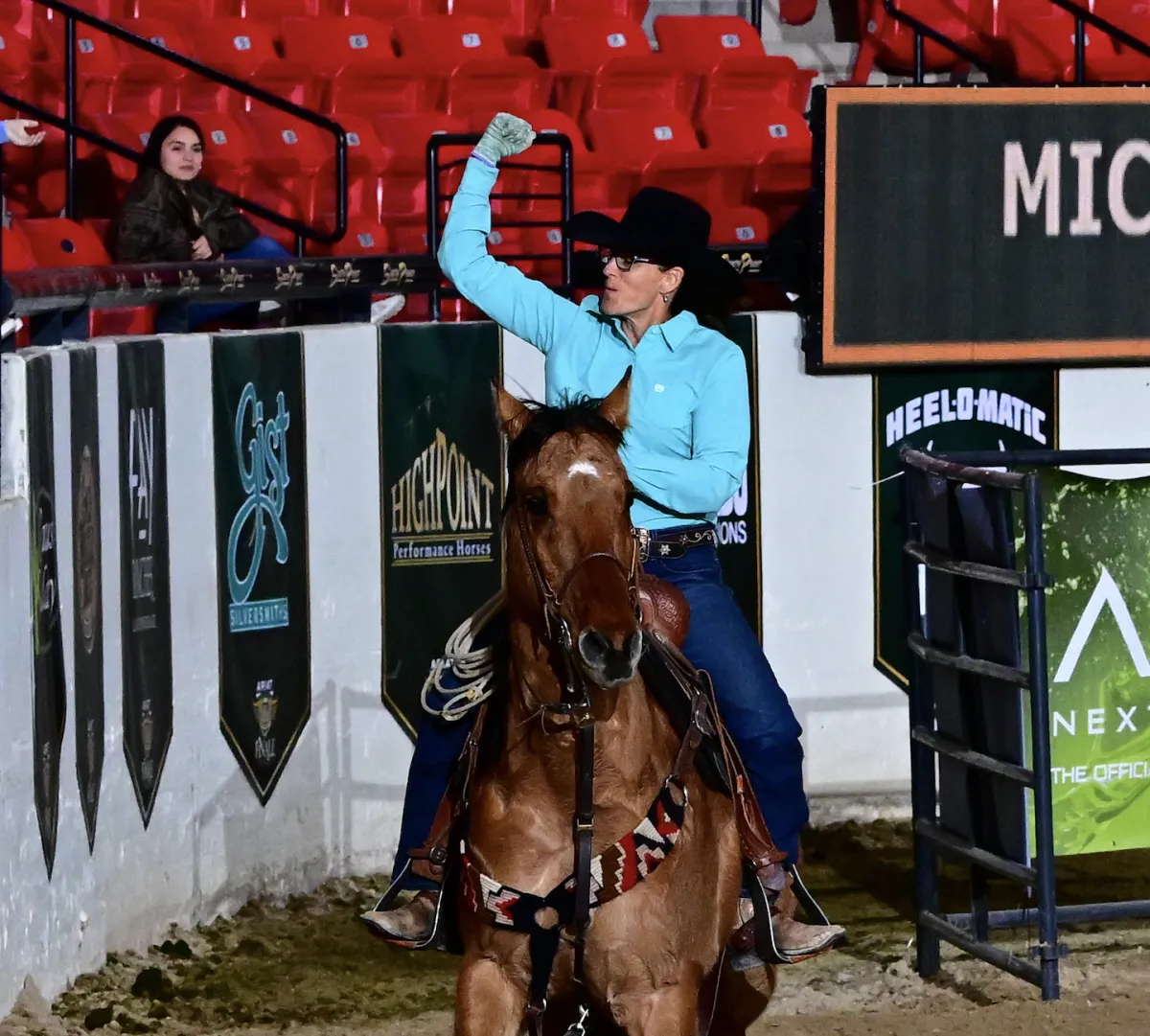
That decision, more than any run, any horse, or any rope, is what got me to the World Series of Team Roping in Las Vegas, where my partner and I won from high call.
Everyone has something to overcome. Some obstacles are much bigger than mine, like a diagnosis or the loss of someone you love. I'd never compare a roping obstacle to those. But the same principles apply. Here are the five mindsets that have carried me.
1. Identity: Decide who you are before the obstacle does
Most of us wait for the obstacle to tell us who we are. "I'm not someone who gets to practice much." "I'm not someone with the right setup."
Overcomers flip that. They say, I'm someone who doesn't let this stop me. That's an identity statement, and identity drives behavior. When I started saying "I am an overcomer," my choices followed.
2. Purpose: Your why is bigger than the obstacle
When the why is big enough, the how gets figured out. I didn't keep hauling alone through rain and snowstorms because it was fun. I kept going because roping gave me something I couldn't get anywhere else.
Ask yourself: Why am I doing this? If the answer is only "to win," it won't hold up on a hard day. A deeper why will.
3. For me, not to me: Ask what it might be making possible
Not having my own cattle felt like something happening to me. But it forced me to build relationships, get creative, and value every single run. That wasn't punishment. It was preparation.
You don't have to pretend a hard thing is good. You can just get curious: What might this be making possible?
4. Asking for help: Overcomers build a team
This one was hard for me. I thought needing help meant I wasn't capable. In reality, every step forward I took came through other people: the friends who let me rope at their place, the ones who partnered with me when I had no partner.
Make the ask small and specific. People love to help when they know exactly how.
5. Self-compassion: Be kind to yourself on the way
Overcoming isn't a straight line, and you'll miss. Here's how I talk to myself after a miss: That's roping. Everyone misses. I’ll get the next one! Or, that was unlike me, how strange! Or, I'll take that to the drawing board and get it figured out.
Notice it isn't "no big deal." It's kind AND it has a plan. That's the difference between self-compassion and letting ourselves off the hook.
Start small
You don't need to overhaul your life this week. Pick one of the five to practice today, and do it again tomorrow. Doing a little bit every day adds up to a lot.
Take the next step
Listen to this week's episodes of the Cowgirl Up podcast for all five mindsets in 3 to 5 minutes a day, wherever you get your podcasts.
Want help building an overcomer's mindset for your own sport? Book a free discovery call with me.
About Laurie: Laurie Blickenstaff is a Certified Mental Performance Coach, competitive team roper, and founder of Mental Game 101. She helps western horse sport athletes build the mental skills to perform under pressure and hosts the daily podcast Cowgirl Up. She lives in Gypsum, Colorado.
Mental performance training is NOT intended as, nor is it a substitute for, mental health care.
