The Village That Made Me: What I Learned From a Letter I Found in a Drawer
Last week I found a letter I hadn't seen in decades.
It was written to me when I was 11 years old. The handwriting was careful and a little slanted, the kind of handwriting that comes from someone slowing down on purpose so a kid could read it. She had drawn out the barrel racing pattern by hand. Underneath it, she'd written down pieces of horse knowledge she wanted me to study before my next lesson at her place.
I sat there holding a piece of paper that was older than some of my friendships, and I felt something I wasn't expecting. Not just nostalgia. Gratitude, sharpened into something almost physical.
Because that letter wasn't just a nice gesture from a woman who liked kids. It was proof of a village. And I don't think I fully understood, until I held that paper in my hands, how much that village built the competitor — and honestly, the person — I became.
One Dad, Six Kids, and a Gap That Had to Be Filled
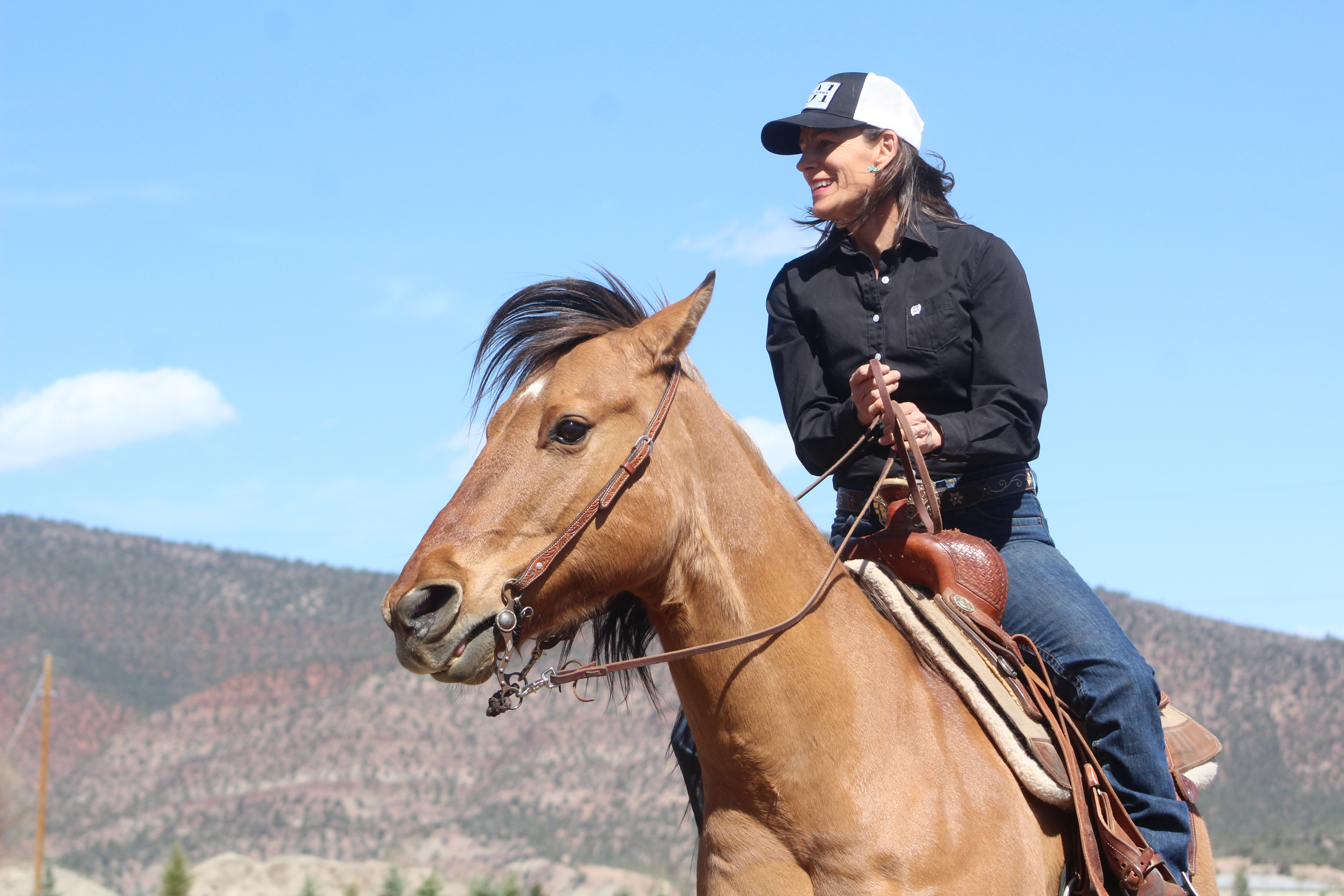
Here's some context that matters. I'm one of six kids, and I was the only one who rodeoed. My dad was a rodeo cowboy, but he'll be the first to tell you — with a laugh — that he was never much of a horseman. He was a city boy who found his way into the arena. He could keep a horse alive. He could lope a few circles to warm up. Then he'd hop off fast enough to rope a calf or wrestle a steer, and that was about the extent of his horsemanship.
He loved that I rodeoed. But with five other kids and a job and a life, he could not be everywhere I needed him to be. He could not teach me everything I needed to know.
On paper, that sounds like a limitation. A gap. Something a kid might resent.
Instead, it became the door that let other people in.
Two women took me under their wing and taught me the art of barrel racing, along with a hundred small pieces of horse knowledge I never would have picked up otherwise. I think about them today with more fondness than I can fully put into words. One of them is the woman who wrote that letter — sitting down to sketch a pattern for a horse-crazy 11-year-old who didn't have anyone else to teach her, simply because she wanted to.
There were also the parents of my high school rodeo friends. The ones who looked out for me at rodeos. Who let me stay with them. Who hauled me along in their trucks and trailers when my own family couldn't make the trip work. There was a family who let me practice roping at their place, right alongside their own kids, no different than one of their own.
None of them had to do any of it. That's the part I keep coming back to.
Why the Isolation Turned Out to Be a Gift
I was a shy kid. Left entirely to my own devices, I would not have sought most of this out. I needed to be pulled in.
And person after person pulled me in.
Looking back now, as a mental performance coach, I understand something I couldn't have named at 11: the people who show up for us outside our own household are not a consolation prize for what we're missing at home. They're often the exact thing that builds resilience, confidence, and skill in ways a single parent or a single mentor never could on their own.
Researchers who study youth development call this a "constellation of mentors" — the idea that kids who go on to thrive rarely credit one single influential adult. They credit a scattered collection of them: a coach here, a neighbor there, a friend's mom who always had room for one more kid in the truck. Each one contributes something different. Together, they build something no individual person could have built alone.
My dad's limited availability wasn't a gap in my development. It was the crack that let an entire village in.
What I Did With the Letter
Part of a challenge I've given myself lately is to make an impact or show kindness every single day, in ways big or small. So when I found that letter, I knew exactly what to do with it.
I took pictures of it and sent them to her daughter over Facebook Messenger, just to say thank you — for everything her mom did for an 11-year-old who was hungry to learn and didn't have anyone else to teach her.
Her mom was sitting right there when her daughter saw the message. She got to hear it read out loud. And she was thankful, genuinely thankful, for a kindness she gave away for free more than thirty years ago.
That's the part that stays with me. A gesture she probably didn't think twice about in the moment got to circle all the way back around, decades later, and land exactly where it needed to land.
The Practical Takeaway
We rarely know, in the moment, which kindness is going to be the one someone remembers thirty years down the road. The letter. The truck ride. The extra plate at the dinner table. It usually doesn't feel like a big deal when we're doing it.
But it is. Every single time.
So here's what I'd invite you to do this week: think back on your own village. The coach, the barn owner, the friend's parent who always had room for one more. And then tell them. Today, if you can. You never know whose drawer that message ends up sitting in for the next thirty years.
If this resonates with you, I'd love for you to tune in to this week's episodes of Cowgirl Up, where we're talking about the impact we can make in someone else's life — and the unexpected benefit to our own mindset.
And if you're ready to build the kind of mental game that lets you show up as your best self, in the arena and everywhere else, I'd love to talk. You can book a free discovery call anytime.
Mental performance training is NOT intended as, nor is it a substitute for, mental health care.
About the Author
Laurie Blickenstaff is a Certified Mental Performance Coach and the founder of Mental Game 101, where she helps competitors in western horse sports build the mental skills and unshakeable confidence to perform under pressure. She's the host of the daily mindset podcast Cowgirl Up and a competitive team roper — 2023 World Series of Team Roping #7 Yeti Champion. Learn more at mentalgame101.com.
