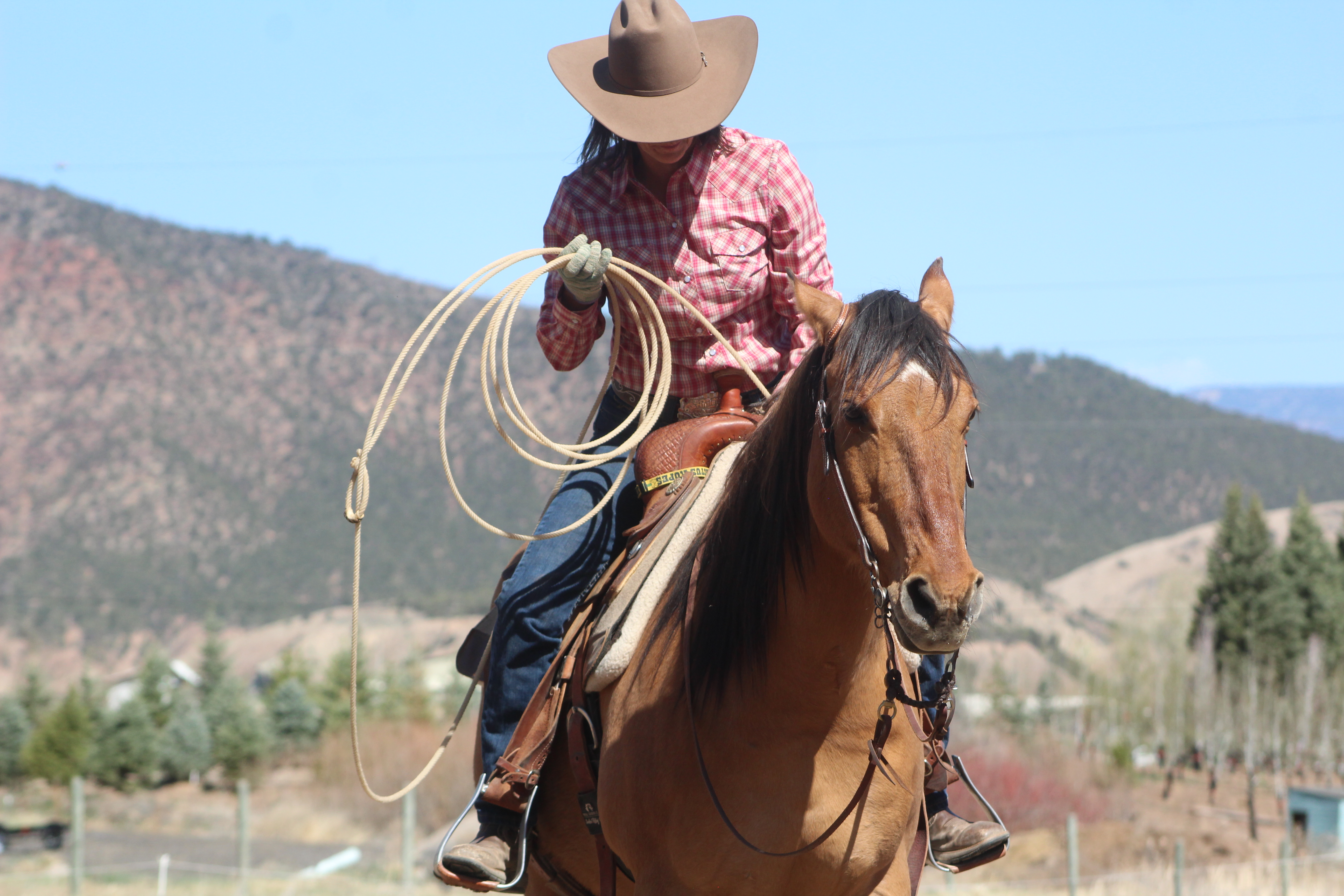
Visualizing for Trust: Be Prepared For Anything Before You Even Get There
Bright lights. Big cameras. Huge crowds. And my own face, up on the jumbotron.
That's what was waiting for me at the World Series of Team Roping Finale in Las Vegas. It was the biggest stage I had ever roped on.
I knew if I waited until I got there to figure out how to handle all of that, I'd be in trouble. So I went there first. In my head. Over and over again.
So, what is visualization training, really? And why did it end up being one of the most important things I did to prepare for the biggest event of my roping career? Let me tell you.
Visualization Training Isn't Daydreaming
Visualization training is the practice of mentally rehearsing a performance, in detail, before we ever do it for real. It's not wishing. It's not picturing ourselves holding up a buckle and calling it good. It's structured, specific rehearsal of what we're going to see, feel, hear, and do.
Here's why that matters. Our subconscious mind runs about 95 percent of what we do. It's our autopilot. And it accepts whatever we feed it. When we're under pressure, we don't rise to the level of our hopes. We fall back on whatever our autopilot has been trained to do.
Sports visualization is how we train that autopilot when we're not in the arena.
What the Research Says About Visualization for Athletes
One of my favorite studies on this comes from neuroscientist Alvaro Pascual-Leone. He had one group of people physically practice a short piano exercise every day for five days. A second group never touched the keys. They only practiced the exercise in their heads.
When the researchers mapped the brain activity of both groups, they found similar changes in the area of the brain that controls movement. The group that only imagined playing was building the same pathways as the group that actually played.
Now, the physical practice group still performed better, and that's important. Visualization doesn't replace putting in the reps. It multiplies them. It lets us practice when our horse needs a day off, when it's ten degrees outside, or when we're sitting in the truck waiting for our call.
Our brain doesn't need us on the piano bench, or in the box, to start building the pathway.
How I Roped the Finale Before I Got There
Getting ready for the Finale, I visualized everything. In detail.
I saw each of my four runs, in each of the different arenas. I pictured the bright lights, the big cameras, the huge crowds, and seeing myself up on the jumbotron. And I didn't just picture the perfect version of every run. I rehearsed the "what ifs."
What if I come back high call?
What if I'm 20th call back?
What if I'm roping in the consolation round?
I wanted to feel prepared for as many situations as I possibly could, so nothing would catch me off guard.
And it worked. When I got to Vegas and rode into those arenas, I had the strangest, most wonderful feeling. I had already made these runs. Because in a way, I had. My mind had been there over and over again.
So when it was game time, I didn't have to force anything or think my way through it. I could finally do the thing every coach tells us to do and almost nobody explains how to do.
I could trust my training.
Why Visualization Training Builds Trust
This is the part most of us skip.
"Just trust your training" is great advice. But trust isn't something we can turn on at the gate. It's something we build ahead of time.
When our subconscious has already been somewhere, our conscious mind can quiet down. We stop overthinking. We stop trying to control every little piece of our run. We let go and let our preparation do its job.
That's what visualization training gave me. Not a magic trick. Freedom.
What Makes Visualization Actually Work
I work with every one of my clients on visualization, and I build it a little differently for each of them, because a barrel racer's run looks nothing like a heeler's or a mounted shooter's. But the visualization that works always has a few things in common.
It's structured. It keeps our mind on task, step by step, so we don't drift into daydreaming or, worse, rehearsing our mistakes.
It's specific. The more detail, the more real it is to our brain.
It prepares us for more than the perfect run. Rehearsing the curveballs is what keeps them from rattling us later.
And it's consistent. Doing a little bit every day adds up to a lot. A few focused minutes most days will do more than an hour the night before a big event.
That's the difference between hoping we'll perform under pressure and knowing we've already been there.
Want to Go Deeper? I'd love to talk with you. Learn more about coaching at mentalgame101.om or book your free discovery call here: https://thehub-api.mastermind.com/widget/booking/4lv6jvtWDaKLScRzga20
My preparation fuels my belief. Yours can too.
To your success,
Laurie 🤠
About the Author
Laurie Blickenstaff is a Certified Mental Performance Coach and the founder of Mental Game 101. A competitive team roper with a World Series of Team Roping win, she helps women in western sports like barrel racing, team roping, breakaway roping, and cowboy mounted shooting build the mental skills to perform consistently under pressure. She hosts the daily Cowgirl Up podcast and lives in Gypsum, Colorado.
Mental performance training is NOT intended as, nor is it a substitute for, mental health care.
