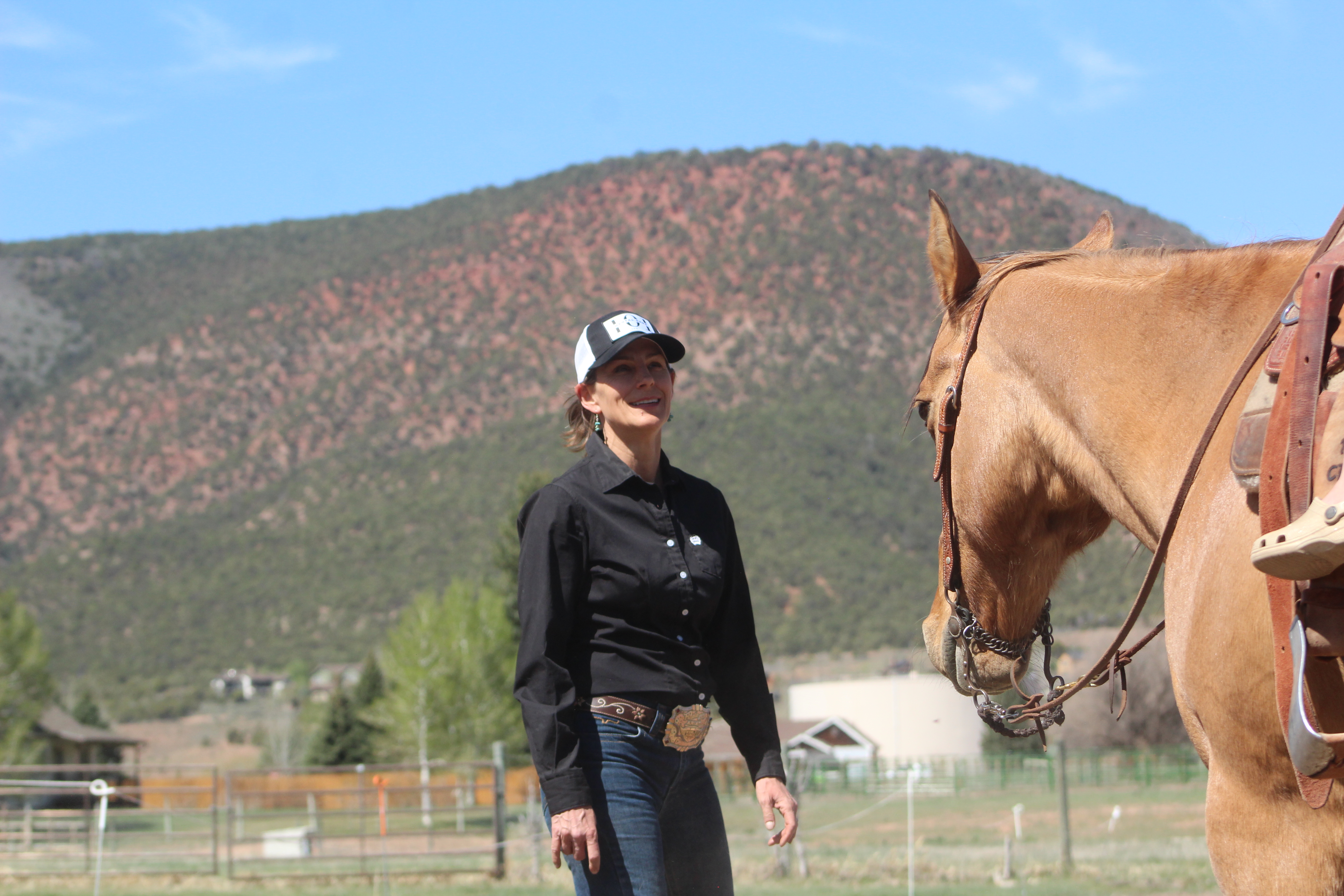
HOW TO SURROUND YOURSELF WITH POSITIVE PEOPLE (EVEN WHEN YOUR CIRCLE IS SMALL)
When I got back into roping as an adult, I learned two things pretty quickly. First, I had a lot to learn. Second, everybody had an opinion about what I should be learning.
Most of the ropers in my area were men, and they were very generous with their advice. Swing slower. Ride up more. Change your loop. I'd nod, say thanks, and then drive home with my head spinning, trying to fix five things at once.
I was also doing most of it alone. I was working 50 to 60 hours a week, I didn't have my own arena, and I traveled to ropings by myself. My circle wasn't small because I didn't want one. It was small because life was full.
What I didn't realize back then was how much the people around me, and the voices I let into my head, were shaping not just my roping but my confidence.
Why Your Circle of Influence Matters More Than You Think
Jim Rohn is often credited with saying that we become the average of the five people we spend the most time with. I've come back to that idea again and again, and the older I get, the truer it feels.
Our circle of influence isn't just the people we like. It's the people whose words, habits, and expectations quietly become our own. If the people around us treat every competition as something stressful to survive, we start to feel that way too. If they believe growth is possible and are working on themselves, that becomes our normal.
And I want to be clear about something: when I say surround yourself with positive people, I don't mean people who only tell you what you want to hear. I mean people who believe in getting better, who aren't settling, and who want the same for you.
Finding Your People When You're On Your Own
If you're a competitor juggling a career, a family, and a sport you love, you may not have a ready-made group of like-minded people. I didn't. Here's what helped me.
Your circle doesn't have to be in the same room. During those years, some of my most influential mentors were authors and coaches I had never met. I read just about every mental performance book I could get my hands on and listened to podcasts on every long drive. Those voices were shaping my thinking every single day, and they count.
Then, slowly, I started noticing the people in real life who were on the same path: the competitor in the warm-up pen who was clearly working on her mental game, and the friend who was just as hungry to improve as I was. Sometimes we have to go looking for our people. They're out there.
How to Deal With Negative People You Can't Walk Away From
Not every negative influence is a stranger. Sometimes it's someone we love: a family member, a coworker, even a partner. It often sounds like, "Why do you even bother with all that mindset stuff?" or "It's just a hobby."
Most of the time, these people aren't trying to hurt us. Our growth just makes them a little uncomfortable. The best approach I've found is to lead by example instead of lecturing, keep our biggest goals close until they're strong enough to handle some doubt, and protect our space before we compete. We can love people deeply and still decide their opinion about our goals doesn't get the final say.
How to Handle Criticism and Well-Meaning Advice
Back to those generous ropers. Something interesting happened as I started winning more: the advice got quieter. It became obvious that I had a plan, and a plan turned out to be the best filter for advice I've ever found.
I'll never forget one windy day when I was just about up, deep in my pre-run routine, and a roper rode over to tell me I should be using a stiffer rope. That's just not something you change two minutes before a run. So I said thanks, went right back to my routine, and parked it. Later, when I sat down with my journal to analyze my runs, I took it back out and decided whether it was worth trying.
That's how I handle criticism and unsolicited advice now. In the moment, I stay with my plan. Later, I get curious about it, and I consider the source. Brené Brown suggests writing the names of the people whose opinions truly matter on a one-inch square of paper. Some of the best feedback I've gotten has come from people who have never swung a rope but know me and how I compete. Those people make the square.
Building Your Dream Team
In The Confidence Habit, Dr. Cindra Kamphoff describes a Dream Team of Confidence with five roles: a Cheerleader who lifts you up, a Mentor who's a few steps ahead, a Coach who gives you tools and tough feedback, a Challenger who pushes back in a positive way, and a Best Friend who's there through it all.
When I first mapped out my own team, I had a couple of empty seats, and that's okay. An empty seat isn't a failure. It just tells you who to start looking for.
So which seat is empty on your team right now?
Let's Keep Building Together
If this resonated with you, I'm diving deeper into building your mindset team all week on the Cowgirl Up podcast, with short daily episodes you can fit into your drive to the arena. Listen wherever you get your podcasts.
And if the Coach seat on your Dream Team is still empty, I'd love to talk. Book a free discovery call here: https://thehub-api.mastermind.com/widget/booking/4lv6jvtWDaKLScRzga20
To your success,
Laurie 🤠
About the Author
Laurie Blickenstaff is a Certified Mental Performance Coach, competitive team roper, and founder of Mental Game 101. After winning the #7 Yeti World Series of Team Roping Finale in Las Vegas, she left her long career in the title industry to help competitors build the mental skills to perform with confidence, consistency, and joy. She hosts the daily mindset podcast Cowgirl Up and lives in Colorado's Vail Valley.
Mental performance training is NOT intended as, nor is it a substitute for, mental health care.
